


by
Category: Intellectual Property
-

Critical Analysis of the 2022 Nigeria Copyright Act
The 2022 Nigeria Copyright Act (Act No. 8), which came into effect on March 17, 2023, marks a significant modernization of Nigeria’s copyright laws, aligning them with global best practices and addressing the needs of a rapidly evolving creative economy. This article critically examines key changes introduced by the Act and assesses their potential impact…
-

Trademark Rights and Domain Names in Nigeria
In the digital age, domain names have become an essential part of business identity. However, domain name disputes can arise when a domain name infringes on trademark rights. In Nigeria, such disputes are generally addressed under the principles of trademark law and through the Uniform Domain-Name Dispute-Resolution Policy (UDRP), a globally recognized policy established by…
by
-

Domain Name Registration and Protection in Nigeria: Legal Frameworks and Emerging Trends
In Nigeria’s rapidly expanding digital economy, domain names have become a critical part of establishing an online presence and protecting intellectual property. Here are some insights that provide a broader understanding of intellectual property protection in Nigeria, particularly as it relates to domain names. Trademark Protection and Domain Names: Nigeria adheres to the International Classification…
by
-

Challenges to the Development of Patent Rights in Nigeria
There are a number of challenges that impede the development of patent rights in Nigeria. These include: Lack of Expert Patent Examiners: There is a shortage of qualified patent examiners who possess the necessary expertise in science, engineering, and technology to effectively evaluate patent applications. Consequently, examiners in Nigeria primarily conduct cursory searches for prior…
by
-

Obtaining a Patent in Nigeria
A patent application must be made to the Registrar of Patents and Designs. The application can be submitted by the applicant or their agent. The application must be in English. If the application is submitted by an agent, the applicant must also submit a power of attorney authorizing the agent to act on their behalf.…
by
-

Minimum Time for Granting a Compulsory License in Nigeria Under the Nigerian Patents and Designs Act
Under the Nigerian Patents and Designs Act (PDA), a compulsory license can be granted to a third party without the consent of the patent holder in certain circumstances. The minimum time period after the filing of a patent application before a person can apply for a compulsory license is: Four years from the date of…
by
-

Hesitancy of Local Companies in Nigeria to File Patent Applications
This article will attempt to provide some context that might explain why local companies in Nigeria are hesitant to file for patents. Here is a comprehensive analysis: Lack of Substantive Examination and Uncertainty about Patent Validity: The Nigerian patent system lacks substantive examination. This means patent applications are only reviewed for formal requirements, without assessing…
by
-

Patentability Requirements Under the Nigerian Patents and Designs Act
The Nigerian Patents and Designs Act (PDA) lays out specific conditions that an invention must satisfy to be considered patentable. These requirements, as described in the this article, center around the concepts of novelty, inventive activity, and industrial applicability. Novelty: The invention must be new. This means it must not form part of the “state…
by
-

Rights of a Compulsory Licensee in Nigeria: Under The Nigerian Patents and Designs Act
The Nigerian Patents and Designs Act (PDA) outlines the rights granted to a person who has been granted a compulsory license to use a patented invention. These rights are subject to certain limitations and conditions, and they do not fully equate to the rights enjoyed by the original patentee. Right to Exploit the Patented Invention:…
by
-

Compulsory Licenses in Nigeria: A Balancing Act Between Public Interest and Patent Rights
This is a detailed picture of how compulsory licensing operates within the Nigerian patent system. This mechanism, enshrined in the Patents and Designs Act (PDA), seeks to balance the exclusive rights of patent holders with the broader interests of society, particularly in promoting local industrial development, addressing public health emergencies, and preventing the abuse of…
by

Recent Posts
-
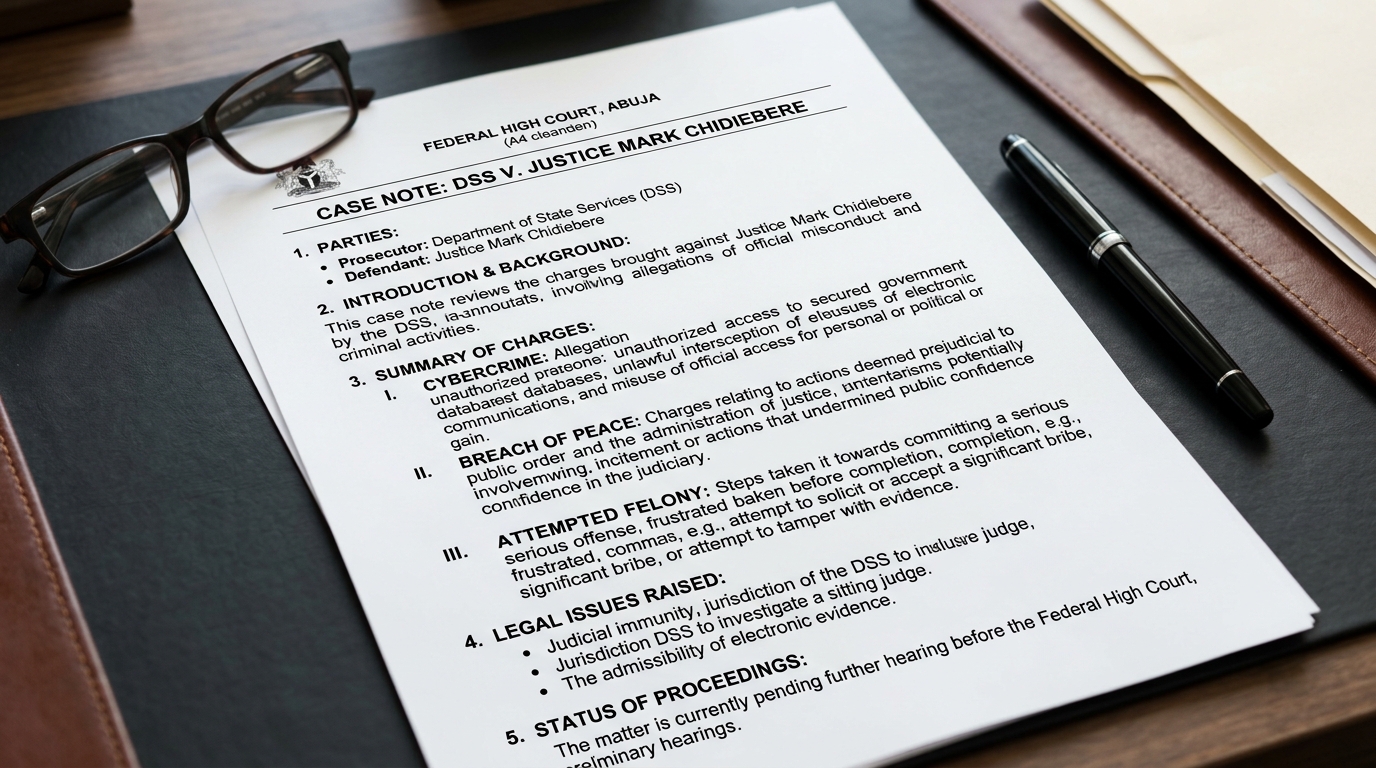
CYBERCRIME, BREACH OF PEACE, AND ATTEMPTED FELONY: A CASE NOTE ON DSS V. JUSTICE MARK CHIDIEBERE
-

Beyond the Robe: The Hidden Psychology of Judicial Decisions
-

THE JURISDICTIONAL CONUNDRUM: ANALYSING THE DETENTION OF JUSTICE CRACK BY THE NIGERIAN ARMY
-
How to Open a Company and Bank Account in Nigeria: A Guide for Russian Investors